
From Daily Scheduling to Facility-Wide Time Coordination
Modern facilities run on more schedules than people usually notice. Classes begin, teams change shifts, appointments move from one room to another, and production tasks often depend on everyone following the same minute. Well-planned clock systems help create that shared reference without asking staff to compare different devices throughout the day. Their purpose can be as simple as displaying dependable time in hallways, or as important as supporting routines across several departments. Schools, hospitals, offices, factories, and public buildings all use coordinated timekeeping in different ways, which is why choosing the right setup starts with understanding how people actually move and work inside the property.
In education, accurate time can help lessons, breaks, exams, and staff responsibilities stay aligned. A few minutes of difference between classrooms may not sound serious, but repeated delays can gradually disrupt the rhythm of an entire day. Healthcare settings have their own demands, where appointments, staff handovers, treatments, and administrative tasks often follow carefully planned schedules. Commercial workplaces benefit for similar reasons. When employees across several floors or work areas see the same time, meetings, shift changes, and scheduled pauses become easier to coordinate. The technology stays in the background, but the consistency it creates can make a busy building feel much more organized.
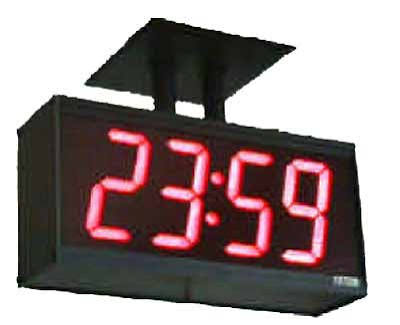
Industrial and manufacturing environments may use centralized timekeeping to support production routines, loading schedules, maintenance windows, and employee shifts. Here, timing can affect more than convenience because one delayed stage may influence the work that follows. Large facilities can also be difficult to manage with standalone clocks, especially when dozens of units need manual adjustments. A connected system can reduce that burden by distributing time changes from one source. Seasonal clock changes, small timing drift, and repeated manual corrections become easier to control, giving maintenance teams fewer individual devices to check.
Public buildings and transportation-related spaces can benefit because visitors need information that is easy to trust at a glance. Waiting areas, corridors, reception desks, and shared spaces work better when displayed time is consistent. The same principle applies to multi-building campuses, where people may move between locations throughout the day. Placement becomes important here. A clock hidden behind a doorway or positioned where it is difficult to read has limited value, even when it is perfectly accurate. Planning visibility, coverage, power needs, and communication methods helps make the system useful rather than simply present.
The practical value becomes clearest when clock systems are chosen around real operational needs instead of treated as ordinary wall accessories. A school may prioritize classroom coverage, a hospital may need dependable time across clinical areas, while a factory may focus on shift coordination and production timing. Businesses should also consider maintenance, future expansion, installation requirements, and who will manage the setup once it is running. When those details are thought through early, centralized timekeeping can reduce confusion and support smoother routines. The technology may be simple to look at, but its everyday contribution can be surprisingly broad, helping people across an entire facility work from the same dependable reference.
